
I’m Lynne Mold, the owner of Koseli Handmade. Since taking over the business in 2017, I’ve focused on building a small, independent brand that offers fairly traded, well-made products from suppliers I trust.
After an earlier career in teaching, running Koseli has meant learning every part of the business, from understanding materials and production methods to developing long-term relationships with makers and wholesalers. It’s been a hands-on process, and one that continues to shape how I choose products and suppliers today.
I believe the items we use in everyday life should be made responsibly, using quality materials, and by people who are treated fairly for their work. That belief guides how Koseli operates, from sourcing through to the products you see on the site.
This page explains more about the materials used in Koseli products and the suppliers I work with, so you can understand where your purchase comes from and buy with confidence.
Our felt makers
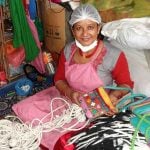
We buy our felt goods from several small workshops in Kathmandu; some employ up to twenty artisans and others are just a couple of people who produce a few items in their own homes. They all work under fair trade conditions.
Read more
All the workshops are bright and airy, with facilities for making drinks etc. Some provide a midday meal.
The work is organised very flexibly, to suit the differing circumstances of the artisans, who are almost always women. Some prefer to come to the workshop each day, some have to make their goods at home because of their family responsibilities. They are nearly all paid for the individual pieces they make, although there are incentive payments to encourage the artisans to be more reliable in their attendance. This is particularly important when there is a big order to get out.
I have witnessed the checking and recording of piece work on many occasions and it appears to be done fairly and openly.
There are a lot of big festivals throughout the year in Nepal, when families want to meet up in their home villages, which may be quite a way from Kathmandu. The owners of the workshops ensure that their workers are paid a bonus just before these, to cover travel costs, gifts for their family and new clothes.
Our hat makers
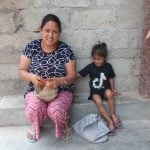
Our hats and bags are crocheted by hand by women living in Kathmandu. They work at home, at a pace which suits them, and their family responsibilities.
Read more
When they want work they go to a small workshop and look at the list of goods to be made. They then choose what they will make according to their abilities – some items are less complicated than others – and according to the amount of work they want to take on.
The next stage is to take the amount of yarn they need and have it weighed and recorded.
Some women like to sit in the workshop and work with their friends for a while, but others hurry back to work at home.
Once the goods are finished they return to the workshop to have them checked, counted and recorded. This is all done honestly and openly so that the women know they will receive the money they have earned.
Our cotton bag makers
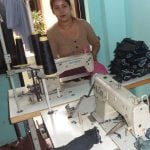
I was pleasantly surprised when I visited the workshop where my cotton bags are made. It is in the private house of the owner, so each room has space for only two or three sewing machines.
Read more
The rooms are light and airy, with fans for when the weather is hot.
Again there are flexible working conditions: some people, such as the pattern cutters are paid a salary, whereas others are paid by the piece. Because of this, there is no production line; each person makes the entire bag after being supplied with the pre-cut fabric. However, everyone works in the workshop because of the specialist machinery required.
Piecework means that the artisans can work the hours that suit them, so that mothers can take time off to deal with family responsibilities.
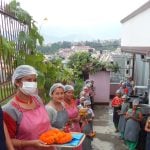
Our commitment
We aim to be transparent and ethical in every part of our business, both abroad and here at home. We try to ensure that our artisans can rely on our business to bring them regular work in a comfortable environment.
Read more
Those who want to, have the opportunity to develop and extend their skills. And they are all treated with respect and are paid in full and on time. Finally, we want to protect our environment by reducing, reusing and recycling wherever possible.
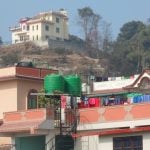
Our ethos
We believe that fair trade should include everyone we work with, both suppliers and customers, so we aim to be friendly and approachable and to send out all orders as quickly as we can, usually within two days, using eco-friendly packaging.
Read more
As our products are all made by hand each piece is unique and may sometimes differ from what you might expect. However, we are happy to refund or replace if you are not entirely pleased with your purchase.
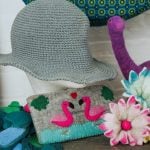
Our products
All our products are made by hand in small workshops or in private homes dotted around the Kathmandu valley in Nepal. They are designed either by the artisans in Nepal or by us.
Read more
The felt items are made from 100% wool, which is imported from Australia and New Zealand and then felted and dyed in Kathmandu. The cotton fabric and yarns used to make our hats and bags, are imported from India and then made up in small workshops in Nepal.